

Why ‘sonic branding’ is important for users of medical devices and pharmaceuticals.
Reading time required: 3 minutes.
Why is Sonic Branding so important in medical devices?
Introduction
When I was young, the “snap, crackle and pop” of my breakfast cereal was novel, it was what I became accustomed to hear before I ate my bowl each morning. It became a habit, and it took a big change as a child to move to a different cereal – I think it was Shredded Wheat (which makes no sound when you pour milk on it!). What I did not know is that I had been experiencing part of the design of the cereal that was intentional. To create a habit through sound.
Our insights
Now, when applying the same methodology to medical and pharmaceutical devices, we often see sound as something to either alert the user, or to alarm, or to confirm an action. But it could be used in a better way - to create habits with users and patients.
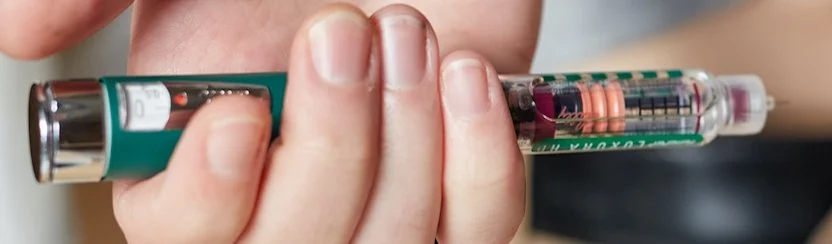
Recently, I have been focusing on pen injectors from a number of well-known manufacturers. And when I talk to users, friends, family, colleagues and read and view online blogs, posts, messages, vlogs, etc, I see that the most popular injectors do include sound as a method to create habits. This is really a good thing for compliance to the medication. For example, one well-known GLP-1 medication uses a proprietary multi-dose pen injector. It is actually a very well-designed pen injector in my opinion because it has included sound in the way it is meant to be used. It uses a ‘click’ at the end of the injection to inform the user that the injection is complete. Not all pen injectors do this. And I like this.
But, what this is doing is to create a habit with the users with this device to not quite follow the intended use – the instructions. It is effective in that users will keep the needle in the skin and enable the prescribed dose to be delivered (until the ‘click’ is heard), but then it is an assumption of the user that the ‘click’ is the final action before removing the needle from the injection site. There is an intended instruction to keep the needle in the skin for a number of seconds following the ‘click’ to ensure the semi-automatic delivery of the medicine is definitely injected, to prevent underdosing. What I have seen is that under half the users actually follow this instruction.
So, whilst the addition of sound (‘click’) in addition to feeling the completion of the injection and the sensation of feeling the injection does aid the user, the patient to know when the actual injecting is complete, it does not promote optimal use – but you could argue it is still safe and effective – which is one of the aims of good usability in a device such as this.
Conclusion
In conclusion, sounds in medical devices, pharmaceutical products, laboratory equipment, diagnostic tools, software, apps and other healthcare products are a good thing. Clever engineers can include them in some cases where they will aid the user to use these products safer, to promote specific actions and to aid safe use and compliance. It is worth to think that hearing the completion of a task or confirming an action or to alert the user is helping the user or patient. It is a good thing to do if it can be done.
Obviously, it does depend on the user or patient demographic – a sound to turn on a hearing aid may not be ideal – it will be unlikely to be heard. And the tone, style, pitch and frequency of the sound can be important also – not using high pitched sounds for elderly users and patients could be a good idea knowing they are likely to have hearing problems detriment with age. It all needs thought and the role of the human factors engineer to assess and determine suitable sound requirements is often required. It all comes down to understanding the user and patient and what aids them – sound can aid safer use definitely and some medical products do this really well. Others could use sound in more suitable ways and we all know and talk about ‘alarm fatigue’ which is when sounds overpower the user and patient. Used wisely, and thought-through, sonic engineering can make a brand, can increase use safety and enhance the user experience.
________________________________________________________________________________________________________________________________________________________
Who wrote this insight?
Our Author today was: Greg Thay, Founder, Principal Human Factors Consultant.
Greg is our founder and principal - leading THAY Medical with thirty years of experience in medical devices, pharmaceutical and diagnostic products and AI. Greg has a passion for quality in healthcare. His strong belief is that we are all end-users of medical products and that we should all have the highest standards of looking after each other, regardless what we do in life individually. This belief leads Greg to focus the THAY Medical team to deliver each collaboration time after time, exceeding expectations and assisting to develop cutting-edge, innovative and usable medical products. Often the most successful products are the most usable ones!
If you want to discuss this blog post, please reach out to Greg below - I am sure he would love to hear from you!
Or, if you would like to know more on our services, please reach out to us below also! We would love to hear from you!